- 1
- 2
- 3
- 4
- 5
 Deep removal of cadmium from crude indium by the glycerol-potassium iodide methodJI Qun, JI Cheng, TANG Chaobo, YANG Jianguang, QING Jianrong, YIN Biao, TANG Shiyang
The similar physicochemical properties of indium and cadmium often result in an excessively high cadmium content in crude indium produced by current smelting pr...
 Process mineralogy and carbothermic reduction roasting behavior of a transitional laterite nickel oreLIU Dongmei, ZHANG Jihao, GONG Jiachen, SHAN Lianjun
Transitional laterite nickel ore is a sluggish and difficult-to-utilize resource. The existing acid leaching process tends to introduce impurity elements such a...
 Mechanisms of cyanide decomposition and sulfur fixation during high temperature treatment of cyanide tailingsZHANG Yuhai, ZHAO Qianfei, ZHAO Bing, ZHANG Jianting, LIU Jie
Given the difficulty in completely removing cyanide from cyanide tailings and the associated environmental risks during high-temperature smelting, this study in...
 Selective complexation leaching mechanism of copper from electroplating sludge by using alkaline lysine solutionZHOU Xiankun, LI Mengying, WANG Qingliang, LI Yuming, HU Fang, LEI Zhiwu
China generates over 10 million tonnes of electroplating sludge annually, which contains high concentrations of heavy metals such as Cr, Cu, and Ni. Conventiona...
 Research on the electrolytic separation process of iron catchers of waste three-way catalysts and preparation of cathode ironLU Wen, SHI Shanlin, SHU Fangxia, ZHAO Xuanbo, LIANG Jiaqi
The iron collector product of spent three-way catalysts (PGMs-iron alloy) is a typical intermediate product from precious metal smelting tailings and scrapped c...
 Qr Code
-
WeChat
- Current Discuss
- First Published
- Album Paper
- Archive
-
Recovery enhancement of Fe-bearing minerals from high-iron red mud tailing generated in the reductive Bayer process through magnetization roasting-magnetic separation
Wang Xiangyu, Wang Hongyang, Zhou Huili, Gao Zhonglin, Zhang Xiaoxue
2026,55(4):66-74, DOI: 10.19612/j.cnki.cn11-5066/tf.2026.04.007
Abstract:
深海多金属结核资源提取(专题)
有色综述
冶炼工艺
材料研发
检测分析
综合利用与环保
实验研究
-
Deep removal of cadmium from crude indium by the glycerol-potassium iodide method
JI Qun, JI Cheng, TANG Chaobo, YANG Jianguang, QING Jianrong, YIN Biao, TANG Shiyang
2026(3):79-85, DOI: 10.19612/j.cnki.cn11-5066/tf.2026.03.008
Abstract:
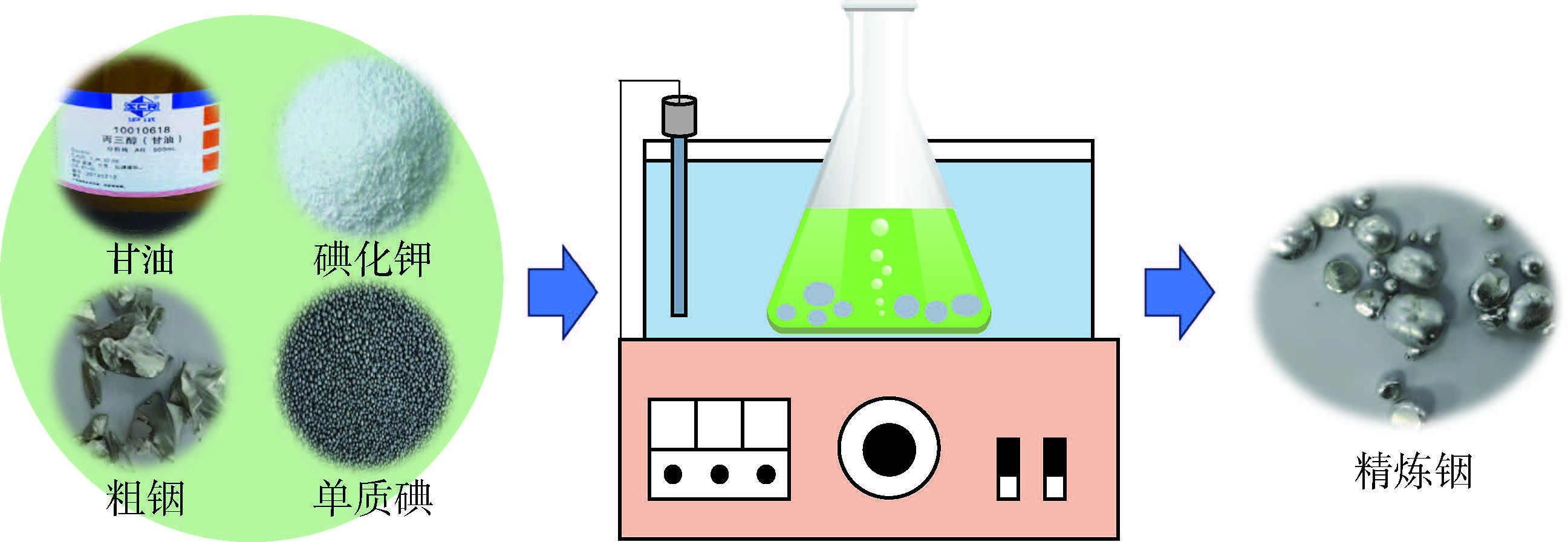
The similar physicochemical properties of indium and cadmium often result in an excessively high cadmium content in crude indium produced by current smelting processes, making it difficult to meet market purity requirements. The glycerol-potassium iodide method exploits the difference in affinity between indium and impurity elements toward iodine, selectively converting cadmium into iodides, thereby enabling targeted cadmium removal. In this study, crude indium was refined using the glycerol-potassium iodide process to deeply eliminate impurities. Single-factor experiments were conducted to determine the optimal refining conditions, followed by validation tests. The main conclusions are as follows. The optimal conditions obtained are a refining temperature of 190℃, a refining time of 10 min, a liquid-to-solid ratio of 8:1, and an I2-KI excess coefficient of 3. Under these conditions, the cadmium content in the refined indium drops to 250 ppm, the indium purity increases to 99.93%, and the direct yield reaches 98.60%. The results demonstrate that this process efficiently removes cadmium from crude indium while also synergistically eliminating impurities such as arsenic, silicon, and thallium. Consequently, indium purity is significantly enhanced without sacrificing a high direct yield. These findings provide technical support for efficient preliminary refining of crude indium.
-
Process mineralogy and carbothermic reduction roasting behavior of a transitional laterite nickel ore
LIU Dongmei, ZHANG Jihao, GONG Jiachen, SHAN Lianjun
2026(3):67-78, DOI: 10.19612/j.cnki.cn11-5066/tf.2026.03.007
Abstract:
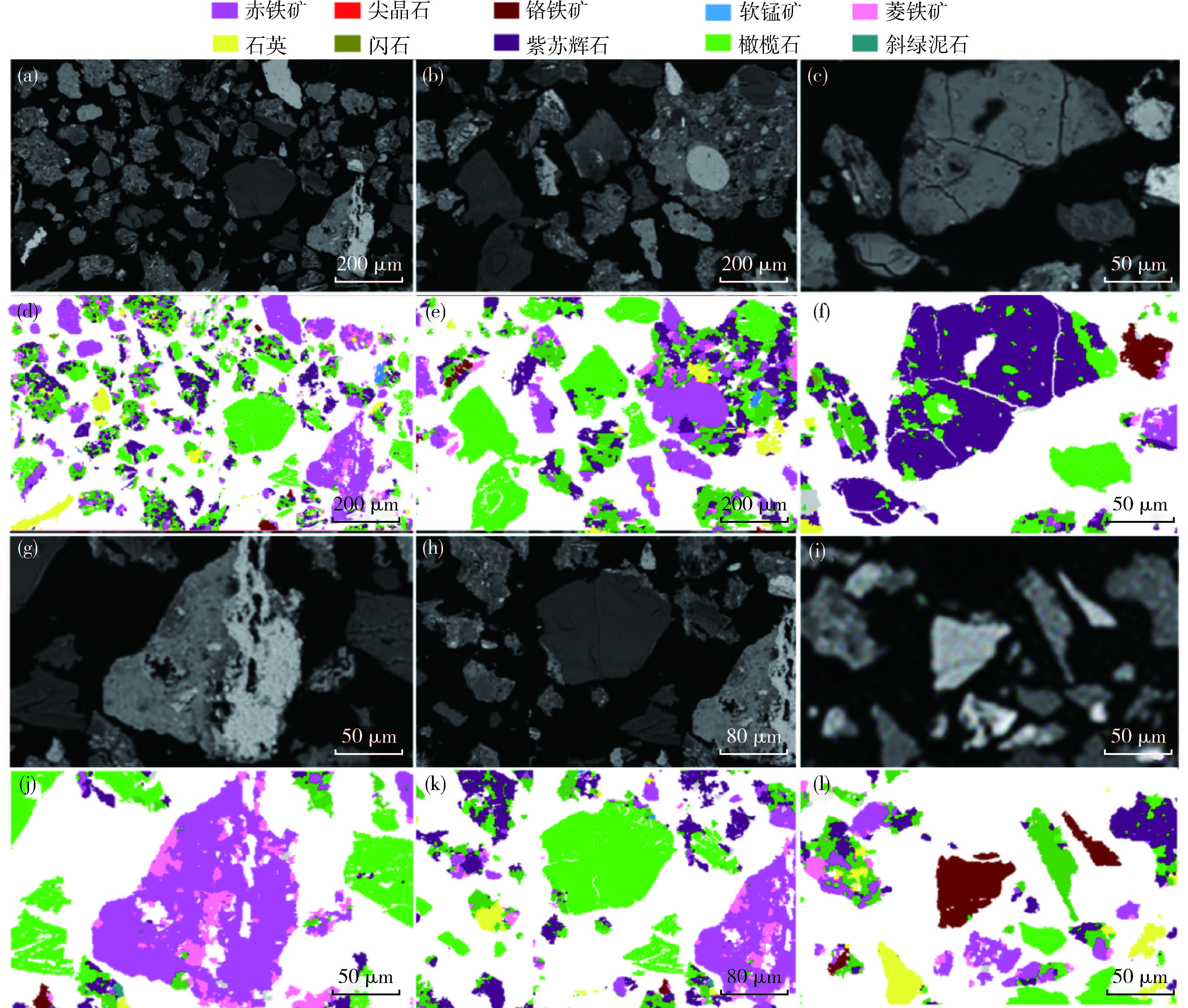
Transitional laterite nickel ore is a sluggish and difficult-to-utilize resource. The existing acid leaching process tends to introduce impurity elements such as iron, magnesium, and aluminum into the leachate, making effective separation difficult. The reduction roasting-ammoniacal leaching process tends to generate Fe(OH)3 colloid, resulting in low recovery rates of nickel and cobalt and a lengthy process. This study addresses this issue by focusing on a certain mine's transitional laterite nickel ore as the research subject. It systematically investigates its process mineralogy characteristics, proposes a process for recovering nickel and iron through carbothermic reduction-magnetic separation, examines the impact of temperature on nickel and iron recovery, and analyzes the structural characteristics of the products. The main conclusions are as follows. The chemical composition and mineral phase analysis of the ore reveal that the nickel and iron grades in the sample are 1.23% and 28.14%, respectively, with SiO2/MgO ratio of 1.53, indicating a low-iron, high-magnesium transitional laterite nickel ore. The microscopic analysis of minerals indicates that nickel and iron elements occur in multiple carriers, with nickel magnetite and goethite being the main occurrence phases; nickel is distributed in olivine, limonite, and hypersthene in an isomorphism manner. By adding 25% coal powder and 5% CaO to the raw material and reducing it through roasting at 1 340°C for 2 hours, the phase composition of the product consists of Fe-Ni, Mg2SiO4, and Al2SiO5. The grades of Ni and Fe in the magnetic separation product reach 4.04% and 83.67%, respectively, with corresponding recovery rates of 92.26% and 79.87%. After magnetic separation, the Fe-Ni alloy is enriched in the magnetic separation product, which exhibits saturation magnetization with a saturation magnetization intensity of 145.51 A·m2/kg, allowing for efficient enrichment through low-intensity magnetic separation. Impurities such as Si and Mg are mainly discharged with the magnetic separation tailings in the form of Mg2SiO4.
-
Mechanisms of cyanide decomposition and sulfur fixation during high temperature treatment of cyanide tailings
ZHANG Yuhai, ZHAO Qianfei, ZHAO Bing, ZHANG Jianting, LIU Jie
2026(3):54-66, DOI: 10.19612/j.cnki.cn11-5066/tf.2026.03.006
Abstract:
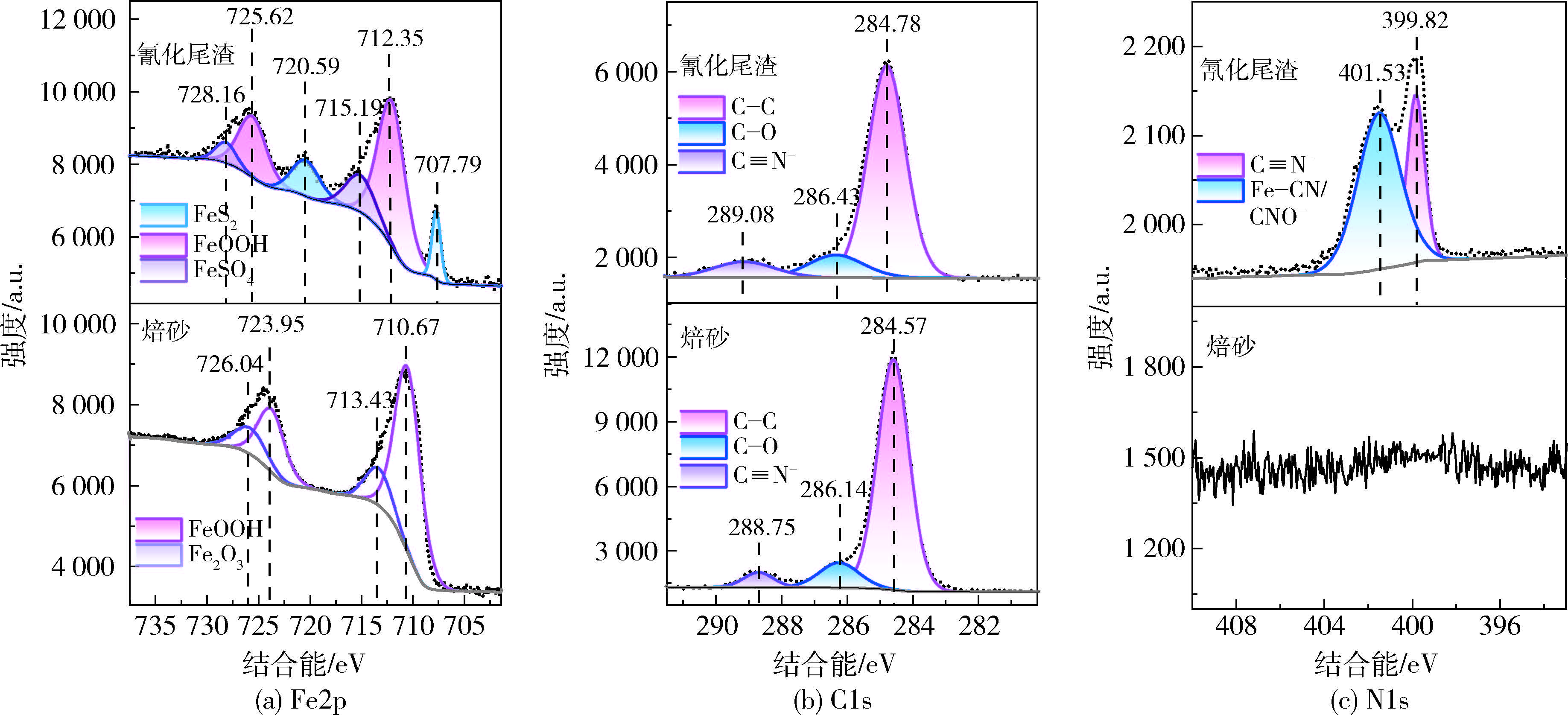
Given the difficulty in completely removing cyanide from cyanide tailings and the associated environmental risks during high-temperature smelting, this study investigates cyanide tailings derived from a gold concentrate in Shandong Province and systematically examines cyanide removal behavior as well as the migration and transformation of sulfide minerals under oxidative roasting conditions. By systematically regulating roasting temperature, residence time, oxygen concentration, and gas flow rate, the optimal operating conditions for cyanide removal were identified, and the sulfur fixation behavior and its influence on the cyanide removal process were analyzed. The results indicate that at a roasting temperature of 500°C for 30 min under an air atmosphere with a gas flow rate of 400 mL·min-1, the total cyanide removal efficiency reached 97. 36%, and the cyanide concentration in the leachate of the roasted product decreased to 0. 187 mg·L-1, satisfying national discharge standards. The study demonstrates that CaO and MgO generated from the decomposition of carbonate minerals, together with iron oxides formed by sulfide oxidation, can capture SO2 in situ during roasting, thereby partially fixing sulfur in the form of sulfates, with the sulfur fixation efficiency remaining stably above 60%. Meanwhile, SO2 released from sulfide oxidation can synergistically enhance the oxidation and decomposition of cyanide in the presence of O2 under appropriate conditions. Combined XPS characterization and thermodynamic analysis elucidated the mechanism underlying the breakdown of Fe-CN complexes and the complete elimination of cyanide-containing species. Overall, the results confirm that oxidative roasting enables efficient cyanide removal from tailings while significantly reducing sulfur-bearing gaseous emissions, thereby providing both theoretical insight and technical support for the safe utilization and pollution control of cyanide tailings in high-temperature co-smelting systems.
-
Selective complexation leaching mechanism of copper from electroplating sludge by using alkaline lysine solution
ZHOU Xiankun, LI Mengying, WANG Qingliang, LI Yuming, HU Fang, LEI Zhiwu
2026(3):43-53, DOI: 10.19612/j.cnki.cn11-5066/tf.2026.03.005
Abstract:
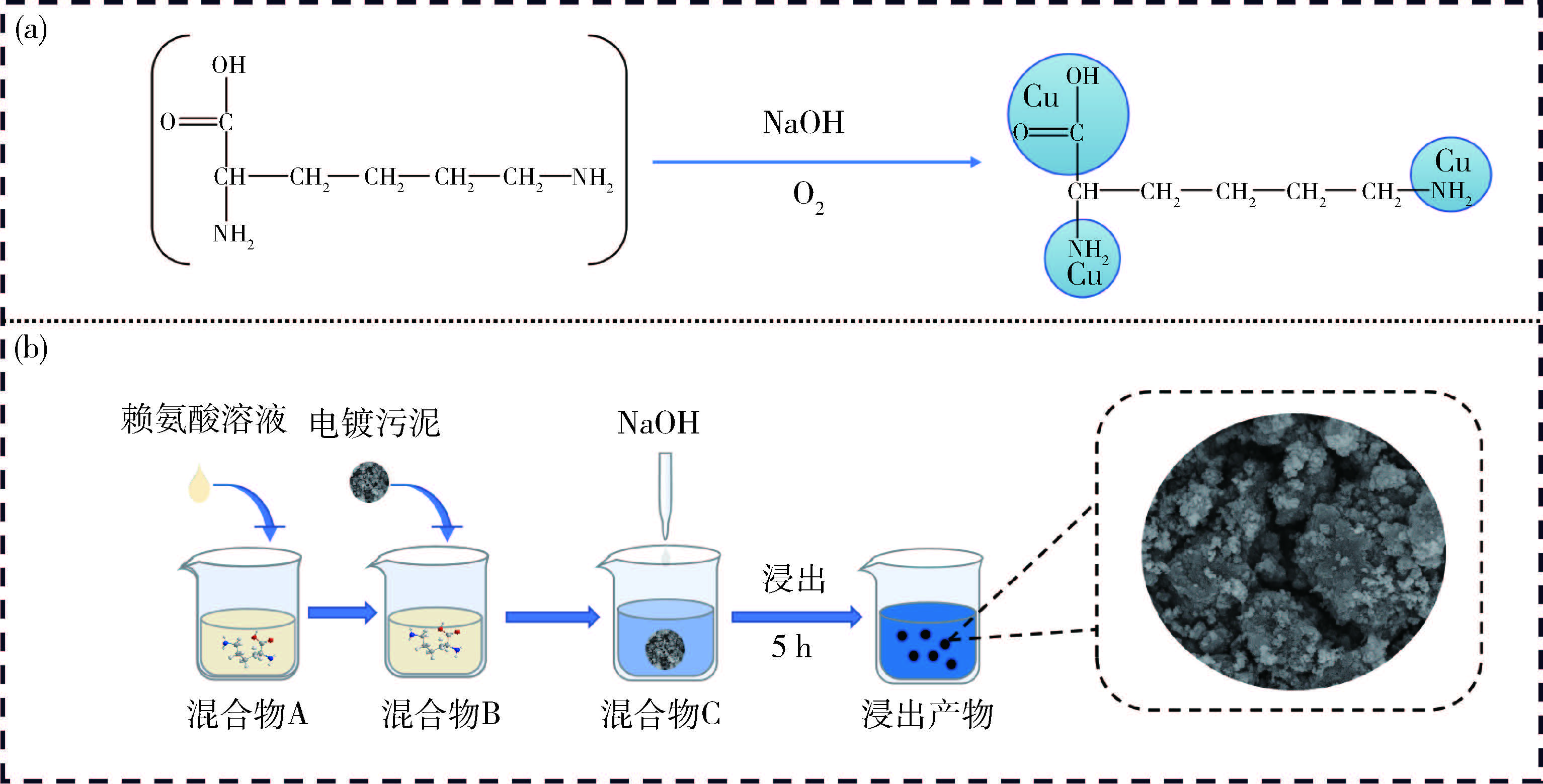
China generates over 10 million tonnes of electroplating sludge annually, which contains high concentrations of heavy metals such as Cr, Cu, and Ni. Conventional hydrometallurgical techniques (e. g. , acid, alkaline, and ammonia leaching) face challenges including secondary pollution and equipment corrosion. Amino acids exhibit high affinity for chalcophile metals (e. g. , Cu, Ag, Au) and form stable complexes, making them a research focus in hydrometallurgy. This study proposes a copper leaching process from electroplating sludge using amino acid complexation. The effects of different amino acids on copper leaching efficiency were systematically investigated. Lysine was identified as the most effective leaching agent, and optimal leaching conditions were determined through single-factor experiments and comprehensive tests. The resulting products were characterized, leading to the following key conclusions: Among arginine, citrulline, glycine, glutamine, theanine, and lysine, lysine achieved near-complete copper leaching (>99%) within 6 h at a relatively low concentration of 0.2 mol/L, demonstrating strong industrial application potential; other amino acids did not meet production requirements. The optimal parameters for copper leaching with lysine were: lysine concentration 0.75 mol/L, liquid-solid ratio 50:1, temperature 328 K, and leaching time 5 h, under which the copper leaching rate reached 93%. Meanwhile, other valuable metal components were scarcely leached, indicating that lysine selectively extracts copper from electroplating sludge. The mechanism involves complexation of Cu2?with -COO? and -NH? groups in lysine, with -NH? showing stronger coordination ability than -COO?. Kinetic analysis revealed that the leaching process follows a mixed diffusion-controlled mechanism, with an apparent activation energy of 36.5 kJ/mol. Compared with existing glycine-based systems, lysine offers significantly faster leaching rates and superior selectivity for copper. These findings provide new insights into the eco-friendly disposal of heavy metal contaminants and green recovery of valuable metals.
-
Research on the electrolytic separation process of iron catchers of waste three-way catalysts and preparation of cathode iron
LU Wen, SHI Shanlin, SHU Fangxia, ZHAO Xuanbo, LIANG Jiaqi
2026(3):19-27, DOI: 10.19612/j.cnki.cn11-5066/tf.2026.03.003
Abstract:
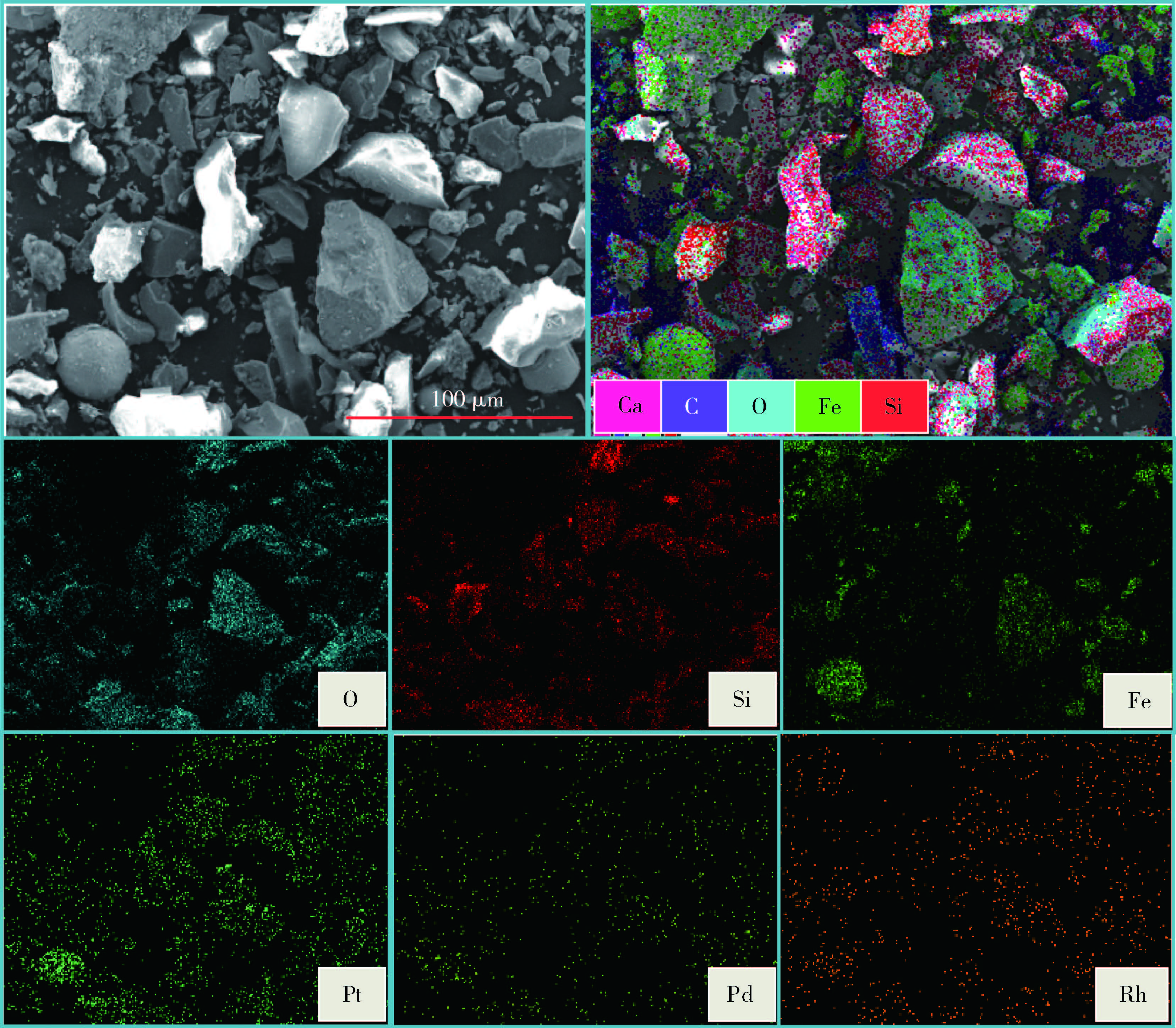
The iron collector product of spent three-way catalysts (PGMs-iron alloy) is a typical intermediate product from precious metal smelting tailings and scrapped catalyst treatment. The large amount of iron present not only severely interferes with the purification accuracy of precious metals but also reduces the processing efficiency of subsequent refining processes while increasing energy consumption and costs. This study takes PGMs-iron alloy as the research object, focusing on the efficiency and controllability of electrolytic separation technology. Anodic dissolution rate (reflecting the stability and sustainability of alloy dissolution) and cathodic current efficiency (characterizing the selectivity of target ion reduction and energy utilization efficiency) were selected as key evaluation indicators. The synergistic effects of process parameters such as electrolysis temperature, electrolyte pH, Fe2+ concentration, and current density, as well as the composite electrolyte system composed of sodium citrate (15 g/L), ascorbic acid (2 g/L) and ammonium sulfate (10 g/L) on separation efficiency, were systematically investigated. Key operating conditions were optimized through single-factor variable experiments and mechanism analysis. Experimental results show that under the optimal conditions of temperature 50℃ , pH=5.0, Fe2+ concentration 120 g/L, current density 350 A/m2, the enrichment factor of platinum, palladium and rhodium in anode slime is 20 times, and the recovery rate exceeds 99 %; The peak position of cathode iron is consistent with the standard card ( PDF 01-087-0721 ), and no other single phase is detected; The waste electrolyte produced in the process can be used to prepare ferrous sulfate by dissolution crystallization; Under the optimum operating conditions, there is no obvious passivation phenomenon in the anode, and there is no obvious side reaction of hydrogen evolution in the cathode. The purity and current efficiency of the product are at a high level. This study not only provides a solid theoretical basis and a direct reference technical scheme for the industrial efficient separation of PGMs-iron alloy, but also provides a new idea for the utilization of PGMs containing waste.
- 2026
- 2025
- 2024
- 2023
- 2022
- 2021
See More
 About
About
Supervisor:China Nonferrous Metals Industry Association
Sponsor:China ENFI Engineering Co., Ltd.
Publisher:China Nonferrous Metallurgy
CN:11-5066/TF
ISSN:1672-6103
First Issue:1972
Publication Cycle:Bimonthly
Address:No. 12 Fuxing Road, Haidian District, Beijing, China
Postal Code:100038
Telephone:010-63936594
Email:zgysyj@sohu.com
